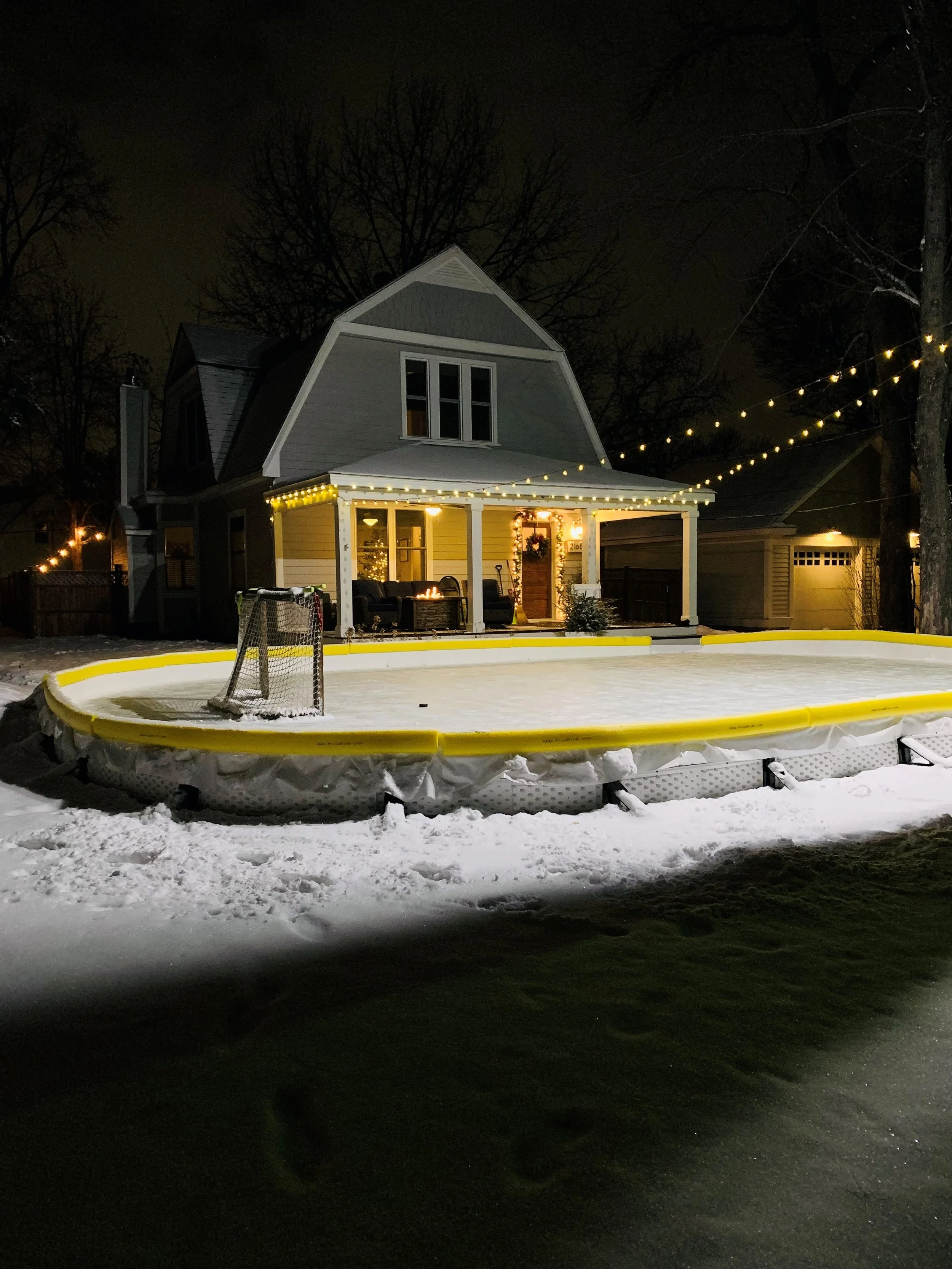
Backyard Ice Rink Maintenance Tips
A backyard ice rink is one of the best parts of winter in Minnesota—but keeping it in good shape is what makes the difference between skating every day and staring at rough, unusable ice.
The good news:
Rink maintenance isn’t complicated.
It just comes down to consistency and doing a few things the right way.
Here’s how to keep your backyard rink smooth, solid, and ready to skate all season.
1. Flood in Thin Layers
This is the biggest mistake people make—adding too much water at once.
(The one exception is your initial fill, where you may add several inches at a time to establish your base.)
After that, everything should be done in thin layers.
Use thin layers of water
Build thickness gradually with multiple passes
Let each layer freeze completely before adding more
Why it matters:
Thick floods create bumps, air pockets, and chippy ice
Thin layers build smooth, strong, well-bonded ice
Think of it like building a sheet—not pouring a pond.
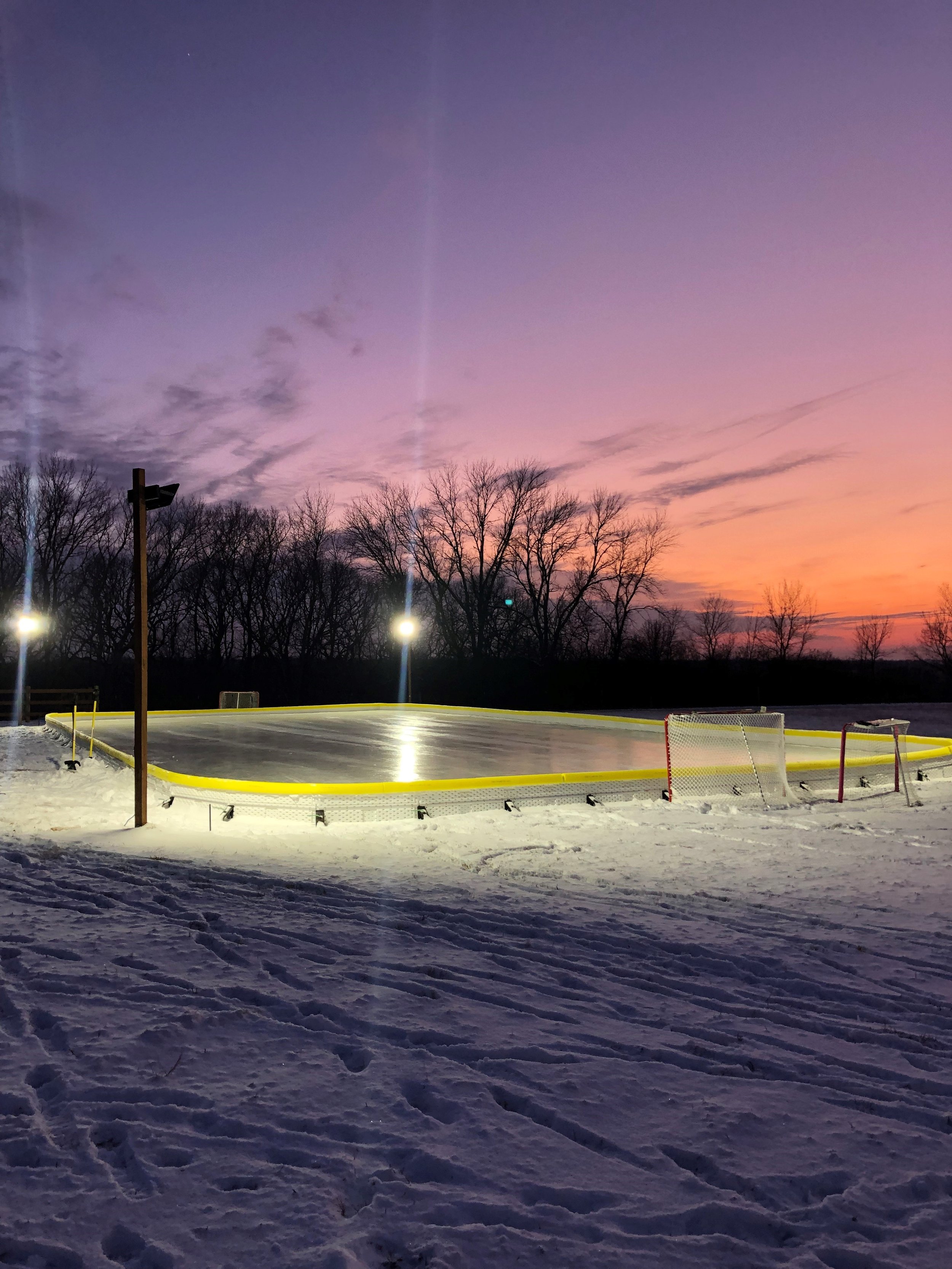
2. Stay Ahead of Snow
Snow is your rink’s biggest enemy.
If you let it sit:
It insulates the ice (slows freezing)
Turns into slush when temps rise
Creates rough, uneven surfaces
Best practice:
Shovel as soon as possible after snowfall
Use a wide shovel or snow pusher to clear to the edges
Use a scoop shovel to throw snow over the boards
Keep edges and corners clean
The longer snow sits, the harder it will be to remove
A single-stage snowblower is one of the best tools you can use:
Light enough to lift over 18” boards
Clears all the way down to the ice
Handles most Minnesota snowfalls
Even a light dusting makes a difference—stay on top of it and your ice stays manageable.
3. Repair Cracks and Grooves Early
After a few skates, you’ll start to see:
Skate grooves
Chipped areas
Uneven patches
Don’t ignore them.
Quick fix:
Lightly shovel or scrape loose ice
Pack snow into larger cracks and grooves
Add water to create slush and pack it tight
Finish with a thin flood over the repair
Slush is the main ingredient in rink repair.
4. Manage Your Edges and Boards
Your rink edges take a beating over the season.
Keep an eye on:
Ice pulling away from the boards
Low spots forming along the edges
Slush is your best tool here—use it to fill gaps and rebuild edges as needed.
Fixing edges early prevents bigger problems later, especially leaks and uneven ice depth.
5. Use the Right Tools
You don’t need anything complicated, but the right tools make a big difference:
Wide shovel or snow pusher
Hose with a spray nozzle
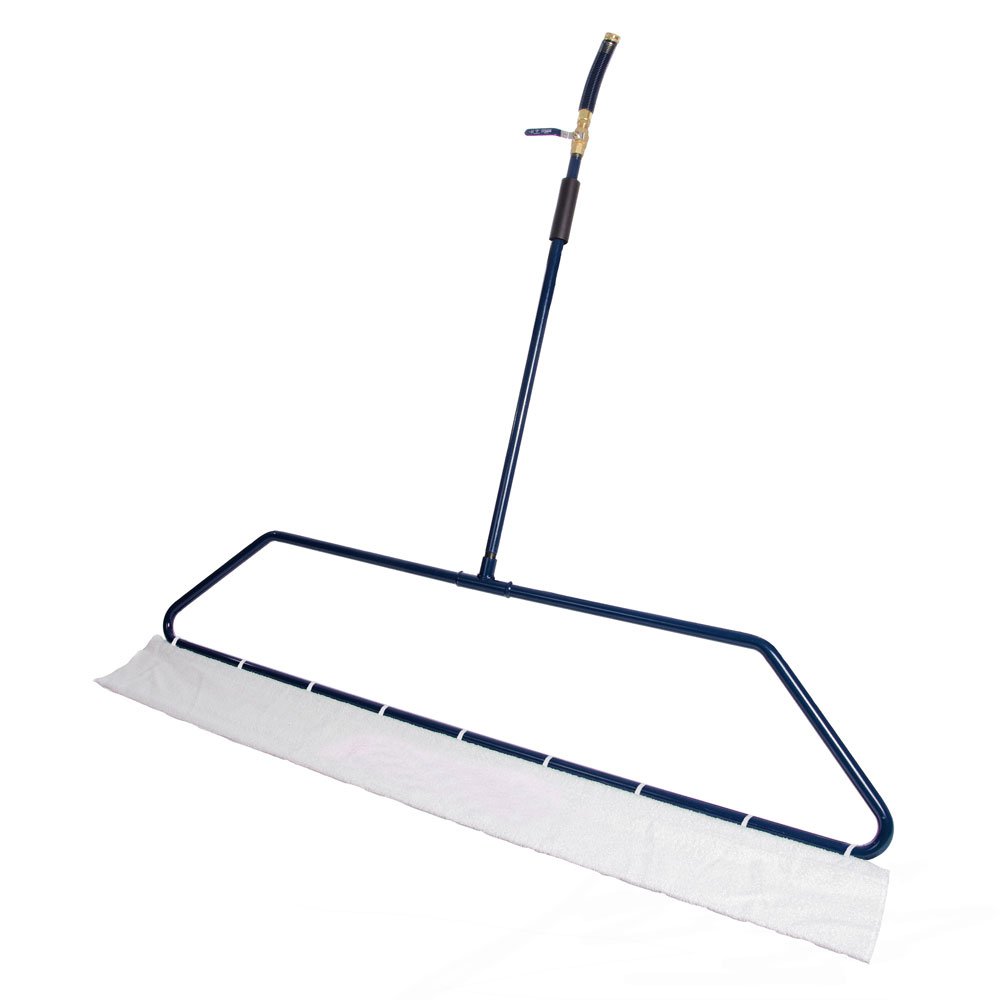
Resurfacer
Ice scraper (optional, but helpful)
Some homeowners build DIY resurfacers, but we’ve found NiceRink resurfacers to be well-built and a real time-saver.
6. Expect Some Maintenance (It’s Part of the Deal)
A backyard rink isn’t “set it and forget it.”
You’ll typically:
Shovel after snowfalls
Flood once or twice times per week
Handle minor repairs as needed
That time investment is part of the experience—and something to factor in when thinking about the true cost of a backyard rink.
7. Know When to Let It Go (Temporarily)
Warm stretches happen.
If temps rise above freezing:
Avoid flooding
Stay off soft ice
Let it refreeze naturally before making repairs
Trying to force it usually makes things worse.
8. The Setup Matters More Than Maintenance
Here’s the truth most people learn the hard way:
A well-built rink is dramatically easier to maintain.
If your base isn’t level or your frame isn’t solid, you’ll spend the entire winter fighting it.
If you’re still planning your rink, understanding how your yard affects your rink can save you a lot of time and frustration later.
9. Want Less Guesswork? This Is the Shortcut
A lot of families start out maintaining their own rink—and quickly realize how much trial and error is involved.
For those who want a more dialed-in experience from the start, many homeowners choose backyard ice rink rentals in Minnesota. A properly installed rink helps eliminate many of the common issues before they ever show up.
And if something does come up during the season, you’re not left guessing.
We’re always just a call away to help you think through it, troubleshoot, and keep things moving in the right direction—so you can spend less time figuring it out and more time enjoying the ice.
Final Thoughts
Backyard rink maintenance comes down to a few simple habits:
Stay ahead of snow
Flood lightly and consistently
Fix small problems early
Do that, and you’ll have smooth, skateable ice for most of the winter.
And once it’s dialed in, it quickly becomes the best screen time replacement for winter—something your family actually uses every day.
Thinking About a Rink This Winter?
Whether you’re building your first rink or looking to upgrade, having the right setup makes all the difference.
You can learn more about how we build rinks that last and make winter something you actually look forward to.